

Most organizations have some kind of AI policy in place. Sometimes it’s an approved list. Sometimes it’s a blocklist. Sometimes it’s a Slack channel where employees can request approval before pulling down a new AI model or using an MCP server.
However, visibility and policies are not governance. Most organizations struggle to enforce policies and track violations for technologies used across the agentic development lifecycle (ADLC). This governance gap is why Shadow AI proliferates and risky developer actions persist.
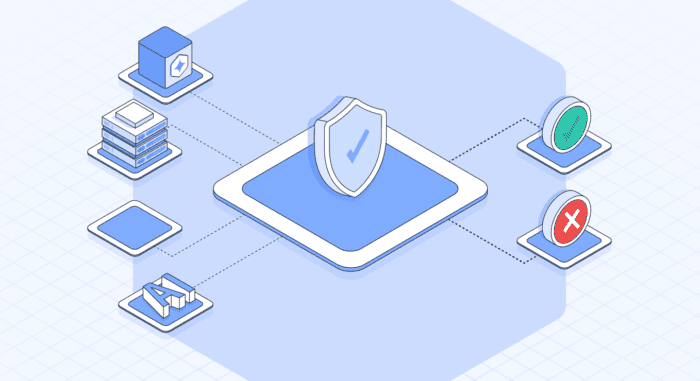
Cycode closes this gap with authorization statuses that turn your ADLC inventory into enforceable controls. Every AI model and MCP server is not only cataloged but also includes an explicit governance decision about what is authorized and unauthorized. Violations generate automatically. Reversals clean themselves up. And every change leaves an audit trail.
Shadow AI is not just a discovery problem. It’s an enforcement challenge.
Shadow AI is rampant. Developers are still pulling models from Hugging Face that nobody approved, still wiring up MCP servers in Cursor that nobody reviewed, still using AI coding agents that security has never heard of. The volume is not going down. It’s accelerating with the pace of the ADLC and non-technical employees creating code.
What has evolved is the security response from diagnosing the problem to intervening with preventative controls. The first wave of ADLC security spending went into discovery: inventories, dashboards, AIBOMs. That work matters, and it surfaced the scope of the problem. But it left a gap in actual governance. Knowing a model is in your environment does nothing if there is no mechanism to act on that knowledge the moment you decide it does not belong.
That is the gap many teams are sitting in right now. They can describe their shadow AI problem in detail. They cannot manage it.
Why “we have a policy” keeps failing
Most AI governance programs today are policy artifacts, not policy systems. They have three failure points that show up reliably in customer conversations.
First, the policy and the enforcement live in different places. The decision sits in a doc, a ticket, or a Slack channel. The detections live in the security platform. Connecting the two is manual work, done by people, after the fact.
Second, there is no default state. New assets show up and get implicit approval, because nobody knows about the usage to approve or reject them yet. Absence of a “no” is treated as a “yes.” That is not governance. That is the lack of governance with extra steps.
Third, reversals create their own mess. When a previously approved tool gets retired, or a previously banned one gets cleared, somebody has to go close out the old tickets and reopen the right ones by hand. Most teams skip it. The policy state and the violation state drift apart, and the audit trail becomes unreliable.
Real governance has to be operational. Authorize this assistant, unauthorize that MCP, set the policy for what can touch which repos, and have the platform manage and track violations


Real AI Governance: Enforceable policy, end-to-end
Every discovered Model and MCP server in your environment now carries an Authorization status: Not Reviewed, Authorized, or Unauthorized. New assets default to Not Reviewed, so nothing is implicitly approved. The decision is yours, and it is the trigger for everything downstream.
Mark it Unauthorized, and violations generate themselves
The moment an asset is marked Unauthorized, Cycode generates violations across your entire environment under the Unauthorized AI Entity policy (ADLC Security category, default High severity). No toggle. No delay. Every existing detection is backfilled, so the full footprint of the asset is visible the second the decision is made.
In the violations table, your team can add Tool Category and Tool Name columns to instantly separate unauthorized models from unauthorized MCP servers. Drill into any violation, and Cycode surfaces the file the asset was detected in, a code preview of the offending block, general info at a glance, and the evidence paths.
Reverse the decision, and violations resolve themselves
Governance is rarely a one-time call. Tools that were once approved get retired. Policies tighten. A model your team OK’d last quarter might be off-limits this one, or the other way around.
Reverse an authorization decision, and Cycode automatically resolves the open violations tied to it, with a clear “Entity authorization changed to Authorized” status change message. The audit trail is preserved. No manual cleanup. No orphaned tickets. The policy state and the violation state stay in sync without anyone having to babysit them.
Bulk classification for the day-one onboarding
The first time a team turns this on, they are not classifying one asset. They are classifying dozens or hundreds across an inventory that has been accumulating for months. Bulk classification lets you select multiple assets and apply a single decision to the entire selection. Authorize a family of models in one action. Reject an entire class of unsanctioned MCP servers at once. The onboarding work is hours, not quarters.
A full audit trail, ready for the next assessment
Every authorization change and every resulting violation lifecycle event is recorded with a full audit log. Two event types, Authorization Status events and Violation Modified events, give your team and your auditors a defensible record of what was decided, by whom, when, and what changed downstream.
For the next SSDF, NIST, SOC 2, or ISO 27001 conversation that includes “show me your AI governance program,” the answer stops being a process document. It becomes a system you can demonstrate.
Intent must be bounded. Agents must be governed.
This is what the Shift to AI calls for in practice. Not policies that describe what should happen. Controls that enforce and enable secure adoption.
Authorization status for Models and MCPs is the first place that the loop closes for the AI layer of your stack. An inventory becomes a control. A decision becomes enforcement. A reversal becomes automatic cleanup. Every change leaves a trace. Security stops chasing shadow AI through Slack threads and starts running a governed inventory that the platform actually enforces.
To see what enforceable AI governance looks like in practice, schedule a demo today.

